

Amidst increasing ecological and planetary crises, many conscientious consumers have turned to “green giving” when it’s time to give a gift. “Green gifts,” also variously referred to as “eco gifts” or “sustainable gifts,” are those deemed to have a smaller environmental footprint, and/or gifts that actually help the climate, environment, nature, wildlife, etc.
In the realm of charitable giving for hunger relief, donations to plant-based food aid initiatives make the best green gifts. This is because plant-based foods have the lowest climate and environmental impacts, use less water and land, and are better for wildlife and biodiversity.
Gift donations to our Plants-4-Hunger program are a perfect match for those looking for green gifts. Plants-4-Hunger is our plant-based hunger relief program that maximizes the well-being of people, animals, and the environment. We split 100% of your donation between our hand-picked feeding programs (details below) with low overhead & proven success in high-need areas. These programs provide both immediate assistance and long-term community solutions that feed people without harming animals.
When donating, choose “Plants-4-Hunger” in the program drop-down menu and (if it’s a gift) “Tribute – In Honor Of.” You can also leave a note in the comment field or e-mail [email protected] with details.
We will mail a personalized card and our info booklet to your recipient (if an address is provided) or send an e-mail notification. For immediate use or last minute gifts, you can also download one of our e-cards to e-mail your recipient or our printable certificates for in-person gifts.
Many people also choose to make a regular donation… you do NOT need a gift recipient to help.
Plant-Based School Meals
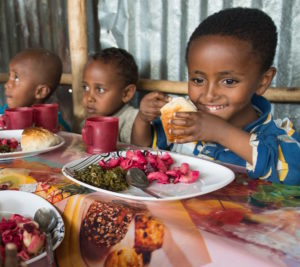 Plant-based school meals for children in need are a life-sustaining form of green gifts. Through our partners International Fund for Africa (IFA) and Grassroot Movement In Nepal (GMIN), A Well-Fed World sponsors nourishing and culturally appropriate plant-based school meals for school children in Ethiopia and Nepal.
IFA’s school nutrition program also builds on-site bakeries and mushroom gardens to generate income and long-term sustainability, while GMIN’s school meal program in Nepal supports the local economy through purchase of grains, legumes and produce directly from local farmers.
These feeding programs not only reduce hunger and malnutrition, but they increase literacy and learning, improving food security for future generations. Donate here.
Food Trees
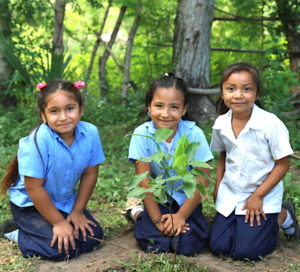 With climate scientists calling for large-scale tree planting to reduce warming, as well as a shift to more plant-based diets to reduce land and other resource use; and with environmentalists urging the need to protect biodiversity as more and more wildlife species disappear due to human activities: food-tree planting initiatives emerge as a win-win-win when it comes to green gifts.
Through our partners the Fruit Tree Planting Foundation, we are able to support reforestation with native food trees in villages of the Amazon rainforest that have been hard hit by deforestation.
We also support school food forest projects in more than 35 schools across Kenya through the Green Generation Initiative. Food trees address the triple crises of global hunger, climate change, and biodiversity loss by providing food and income, carbon sequestration, and wildlife habitat. Donate here.
Community Food Gardens
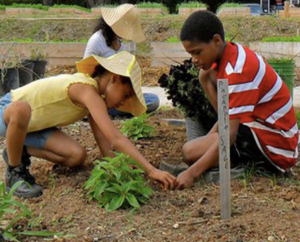 Supporting community food gardens is a great form of green giving that increases access to fresh produce and promotes healing connection to the land. Our partners at Grow Where You Are are a team of veganic farmers and food justice activists empowering people to improve their nutrition and food security by planting backyard and community food gardens in urban food deserts.
GWYA and their partners MaituFoods also provide low-cost food to school lunch programs and run a summer camp to teach plant-based farming skills to young people. They partner with churches and the city to install organic micro-farms on unused land in underserved neighborhoods. Donate here.
Vegetable Seeds
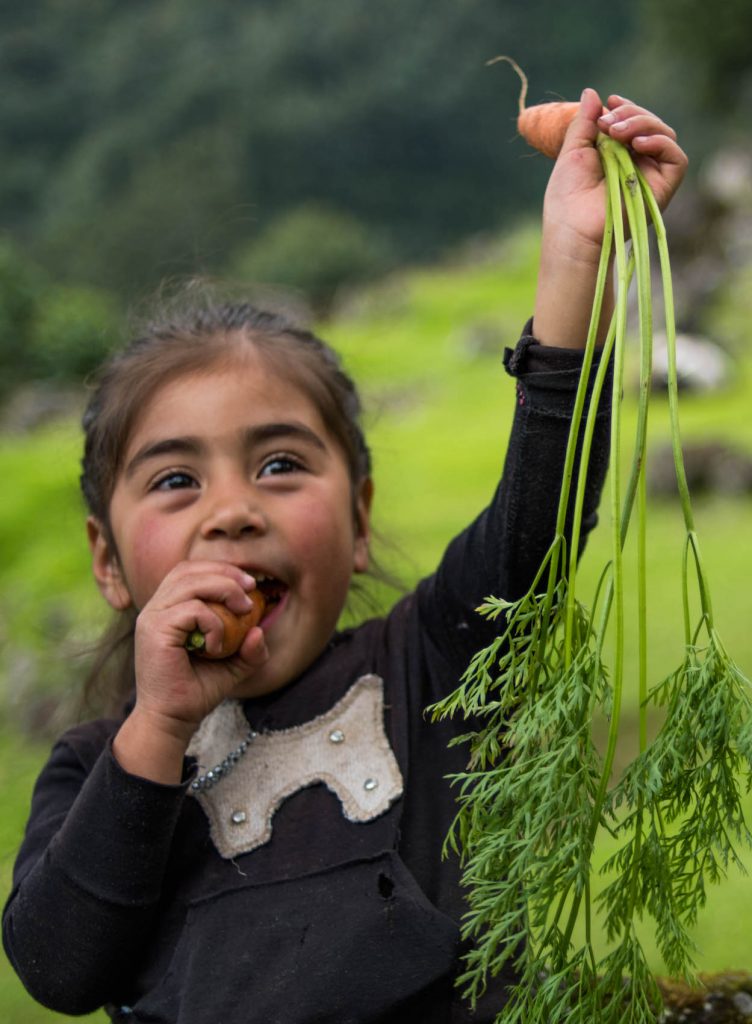 Our partners Seed Programs International provide organic vegetable seeds and growing expertise to food insecure communities around the world. SPI’s global seed donation programs support food gardens in schools, orphanages, childrens’ hospitals, refugee camps, Native American reservations and more.
We also support Native Seeds/SEARCH (NS/S), a seed conservation non-profit in Arizona that preserves and distributes climate-resilient seeds of the peoples of the Greater Southwest. Their seed bank has conserved nearly 2,000 varieties of arid-adapted crops and represents the cultural heritage and knowledge of 50+ indigenous communities. Donate here.